AL MENNIE
IRISH BIG WAVE SURFING PIONEER - OCEAN EXPLORER - AUTHOR - SPEAKER
INNOVATION
Innovation Through Experience
Innovation rarely begins with invention. It begins with experience. Every project on this page grew from time spent in the ocean, identifying problems that existing equipment or methods couldn't solve. Rather than accepting limitations, I worked alongside designers, engineers and athletes to develop practical solutions shaped by real-world conditions.
Inflatable Flotation Development
As inflatable flotation began appearing in big wave surfing around 2011, I immediately recognised its potential—but also saw areas where I believed the concept could be improved.
The earliest system I encountered was integrated into a wetsuit. Drawing on my experience in heavy surf, I felt there were significant limitations in how an inflatable system would function during real-world wipeouts.
Through a mutual contact I was introduced to an industrial designer, and together we began developing an alternative approach. My role was to transfer practical experience from the ocean into the design process, while his expertise in materials, engineering and product development transformed those ideas into a working prototype.
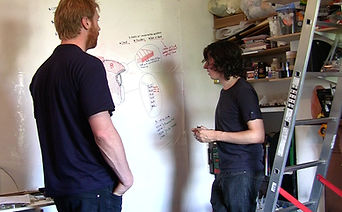
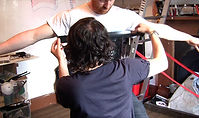
The project involved concept sketches, body casting, prototype fitting and extensive design development. Our objective was simple: to create an inflatable flotation vest designed specifically for the demands of big wave surfing and the realities of life-threatening hold-downs.
Because elements of the project were developed under commercial confidentiality, only a small selection of photographs from the design process can be shared publicly.

Performance Through Experience
As my experience in big wave surfing grew, so did my understanding of what the environment actually demanded from the body.
In the early years I trained using a combination of swimming, running and strength work, believing that general fitness would prepare me for the challenges of the ocean. But every season spent surfing larger waves taught me something new about the physical stresses involved—from repeated hold-downs and long paddle-outs to explosive bursts of power and recovery.
Working alongside sports scientist and World Natural Bodybuilding Champion Rich Robinson, we translated those experiences into a structured training system designed specifically for the type of big wave surfing I was doing in Ireland.
Together we developed separate programmes for paddle-in and tow-in surfing, with distinct off-season and in-season training phases. Every element was shaped by practical experience in the water and supported by sports science, creating a programme tailored to the unique demands of cold-water big wave surfing.
The result wasn't simply improved fitness—it was a training philosophy built around understanding the environment first, then preparing specifically for it.

Survival - Al Mennie
Rescue Sled
As tow surfing developed around the world, rescue sleds became an essential part of operating safely in big waves. At the time, however, they were not readily available in Ireland, and importing one from overseas was difficult.
Rather than wait, I adapted an old hollow plastic kneeboard into a makeshift rescue sled, drilling mounting points and securing it to the back of the jet ski. It was an attempt to solve an immediate problem using the materials available.
Testing quickly revealed its limitations. The rigid construction caused the sled to sit at an unsafe angle behind the ski, while its hard surface increased the risk of injury during rescues. The shape also allowed it to dive beneath the transom, where it could interfere with the jet drive and create a serious safety hazard.
The experience reinforced an important lesson: innovation is as much about recognising when an idea doesn't work as it is about creating one that does. I retired the prototype and chose to operate without a rescue sled until I was able to obtain a purpose-built lifeguard rescue sled from overseas.
Weighted Tow Boards
When I began tow surfing, purpose-built tow boards were not available in Ireland, so my first challenge was to create equipment capable of handling the conditions. Once I began riding larger waves, another question quickly emerged.
How much should a tow board weigh?
Unlike conventional surfboards, where lighter is generally considered better, I discovered that tow boards benefited from additional weight. A heavier board allowed me to release the tow rope earlier and glide into the wave with greater stability. The extra weight also helped the board maintain speed and smooth out the wind chop that is common on many Irish big waves.
Through experience, I also learned that where the weight was positioned mattered just as much as how much weight I added. When the weight sat too far forward, behind my front foot, the board tended to pivot around that point during the bottom turn. By moving the weight further back, closer to my rear foot, I found the board became noticeably more stable and predictable.
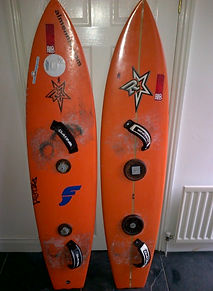
Rather than having new boards built every time I wanted to test an idea, I developed a system that allowed me to experiment. My earliest boards were modified by cutting them open and embedding carefully weighed strips of building-site lead. As my understanding grew, I began installing threaded inserts into the boards, allowing interchangeable dumbbell weights to be secured in different positions. This gave me the freedom to adjust both the amount of ballast and its location depending on the conditions, the size of the waves and what I wanted to learn.
Every session became another experiment. Each adjustment taught me something new about how weight distribution influenced performance, allowing the boards to evolve through practical experience in the demanding conditions of Irish big wave surfing.